



WATER CONSERVATION TIPS
A. In The Kitchen
1) Be practical, use just enough water. As much as possible, utilize used water. Watch for leaks like dripping faucets and have them fixed immediately. A leak from a dripping faucet can waste up to 4,000 gallons of water in a month.
2) Install “flow restrictor†or “aerator†to your faucets. These are gadgets which help minimize as much as 60% of water usage while maintaining the normal water flow.
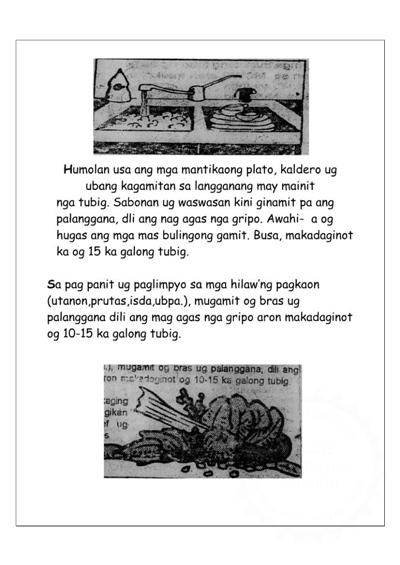
3) Separate greasy plates, pots and other kitchen utensils and soak them first in a basin with warm water. Wash the cleanest first and the dirtiest last. Do not wash under running water, use basin instead. This way, you can save up to 15 gallons of water.
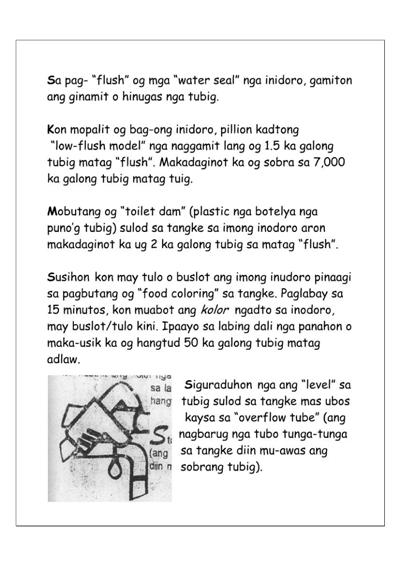
4) Again, in peeling and cleaning raw foods (fruits, vegetables, fish, etc.), do not use running water, use basin and brush. This can save 10-15 gallons of water.
5) Do not defrost frozen meat/ fish under running water, take it out from the freezer long before cooking time and allow it to defrost by itself inside the refrigerator.
6) In cooking or making drinks/ beverages, use just enough water. Do not throw away unused water, utilize it instead in watering the plants or cleaning the house.
7) Do not throw away used water from washing the dishes, utilize it in cleaning the kitchen or mopping the floor.
B. In the Comfort Room
1) Flush only when necessary. Do not throw cigarette butts, napkin or tissue into the bowl or anything that may cause clogging and make you use the flush more often than necessary. A single flush uses about 3.5 to 7 gallons of water.
2) In flushing water-sealed type toilet bowl, utilize used water.
3) Consider “low flush model†when buying new toilet bowl that uses 1.5 gallon of water in every flush. This model can save up to 7,000 gallons of water in a year.
4) Set a “toilet dam†(a plastic bottle filled with water) in the flush tank. This can help save up to 2 gallons of water in every flush.
5) Check for leaks in your toilet bowl by putting “food coloring†in the flush tank. When the color reaches the toilet bowl after 15 minutes, then it is a sign of leak. Have it fixed immediately to avoid wasting as much as 50 gallons of water in a day.
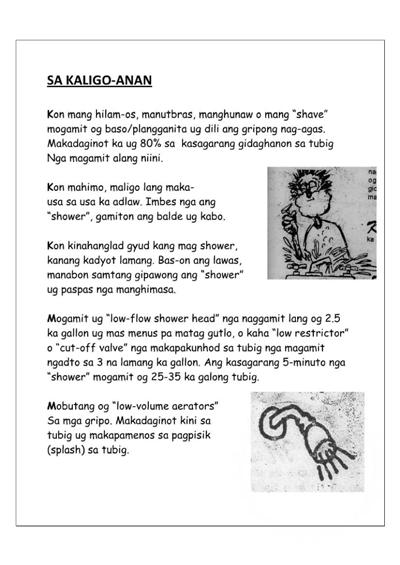
6) Always see to it that the level of water inside the flush tank is lower than the overflow tube (a tube found at the center wherein excess water would leak through).
C. In the Bath Room
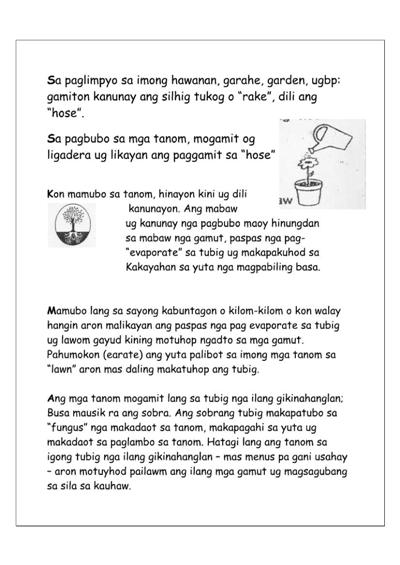
1) When washing, brushing your teeth or shaving, do not use running water. Use basin or glass instead. This can save you up to 80% of your usual consumption when doing these things.
2) As much as possible, take a bath only once daily. Use pail & dipper and avoid using the shower.
3) Should it be necessary to take the shower, do it quick and be diligent to turn it off when not in use.
4) Use “low flow shower head†that uses only 2.5 gallons or less, “low restrictor†or “cut-off valve†that minimizes water usage to only 3 gallons in every bath. Be aware that a 5-minute shower can use up 25 to 35 gallons of water.
5) Install “low volume aerators†in the faucets. These can help save water and minimize splatter of water.
6) Utilize used water from bathing in watering the plants, cleaning the house, washing the car, etc. An ordinary bath can consume 25-50 gallons of water.
D. In Cleaning the House and Doing the Laundry
1) As much as possible, avoid using water hose. Use pail and mop or floor brush in cleaning the floor and passageways.
2) In washing the car, use pail and waste cloth. Used water may still be utilized in washing the tires and hub caps.
3) Maximize use of dishwasher or washing machine by operating it only when full. Use just the correct amount of detergent soap to save water upon rinsing. Consider the models with “load size selectorâ€, “suds saving option†or “variable water level controlâ€.
4) Always recycle; utilize used water as much as possible.
5) In cleaning the yard, garage, garden, etc. always prefer to use broomstick or rake over the water hose.
6) In watering the plants, avoid using the water hose. Use watering can or pail & dipper.
7) Know the proper way of watering the plants:
a) Do it preferably in early morning or late afternoon and when it is not too breezy to avoid rapid evaporation of water thereby maximizing its absorption.
b) Aerate the soil around the plants by cultivating them to enhance water absorption.
c) Water the plants slowly. But do not do it frequently. Quick & frequent watering can cause soil to erode exposing the roots thereby reducing the ability of the plants to absorb water and the soil around them to maintain moisture.
8) Remember that plants only absorb just the right amount of water they need. Excess will just be a waste and may even pose negative effects as this can cause the soil to harden, will promote the growth of fungi that can harm the plant and eventually impede its normal growth. Hence, it is important to give plants just the right amount of water to help the roots grow deep into the soil.
9) Plant the indigenous kinds which do not require frequent watering. Minimize grassy areas and choose plants that can serve as shelter to animals.
10) Make use of the water from your aquarium in watering the plants. It is a good source of nitrogen and phosphorous.
11) Put compost around the plants like sawdust, leaves or moss. This can help maintain moisture and prevent weeds from growing.
E. In Workplaces and In Schools
1) Practice in your workplace the effective methods you know at home in conserving water.
2) Inquire about installation of applicable gadgets and equipment that can help save water consumption.
3) Promote to the officials of your institution/ company to use recycled gray water or reclaimed waste water.